

Why Your Sofa Looks Perfect in the Showroom But Feels Different at Home (And What Most People Only Realise Too Late)
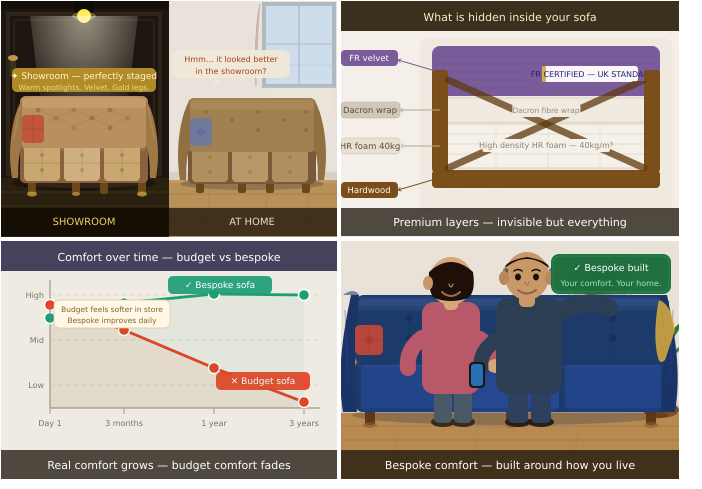
The reason bespoke sofas Bradford buyers choose often feel different at home compared to the showroom is simple, they are tested in controlled conditions, not real living environments. Lighting, short sit tests, and staged setups hide how materials behave under long-term daily use.
✅ TLDR
-
-
- Showroom comfort is designed for first impressions, not long-term use
- Foam density and frame quality change everything at home
- Lighting and staging affect perception in-store
- Real comfort only appears after daily use pressure
- Bespoke furniture solves this mismatch through custom build choices
-
Let’s be honest - this catches almost everyone out
You sit on a sofa in a showroom.
It feels great.
You think:
“Yeah, this is the one.”
Then it arrives at home.
And something feels… slightly off.
Not bad. Just not the same.
And that’s where confusion starts.
Because the truth is simple:
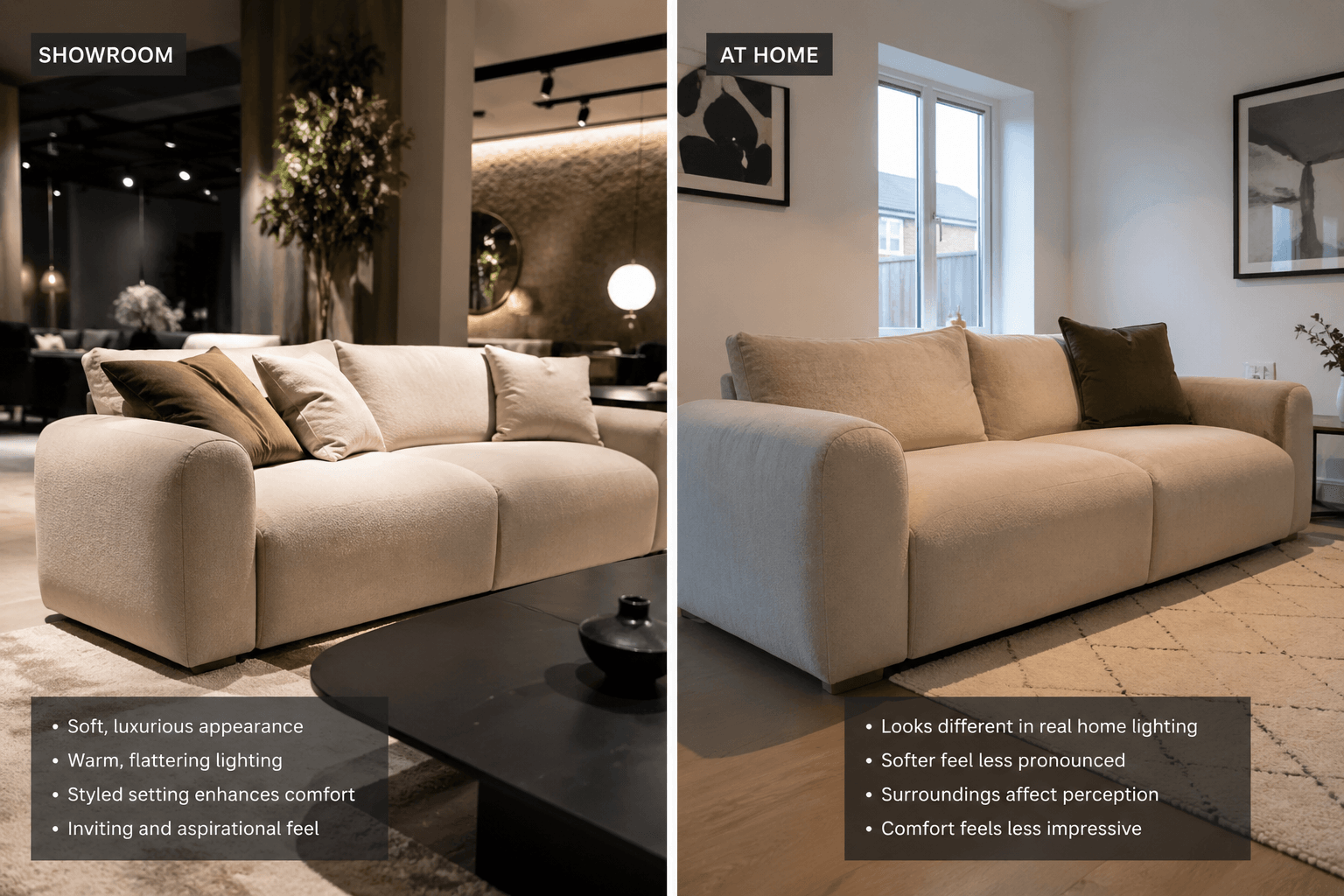
A showroom sofa is not the same experience as a living room sofa.
Why sofas feel different at home
There are three main reasons this happens:
1. Short testing vs real usage
In a showroom, you sit for:
-
-
- 30 seconds
- maybe 2 minutes
- rarely in full relaxation mode
-
At home, you sit for:
-
-
- hours
- daily use
- different positions (lounging, lying, leaning)
-
That difference changes everything.
2. Lighting changes perception
Showrooms are designed carefully:
-
-
- Bright lighting
- Neutral colours
- Controlled ambience
-
At home:
-
-
- Natural light shifts tone
- Shadows change depth
- Colours appear warmer or darker
-
So even visually, the product feels different.
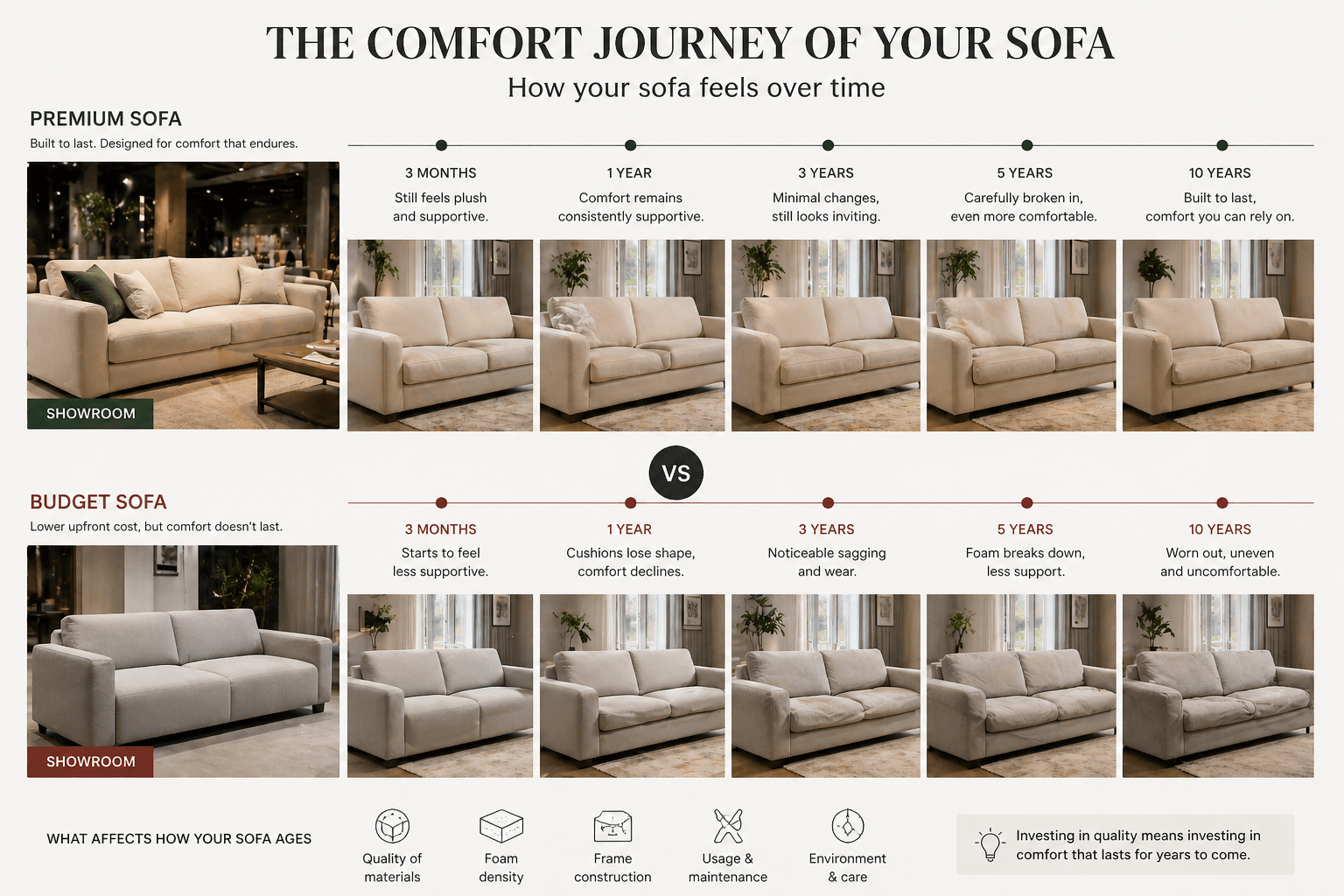
3. Foam and frame behaviour changes over time
This is the big one.
At M I Furniture in Bradford, we see this constantly:
Customers assume comfort = softness.
But real comfort depends on:
-
-
- Foam density
- Frame support
- Weight distribution
-
Low-density foam:
-
-
- Feels amazing initially
- Breaks down quickly
-
Higher-density foam:
-
-
- Feels firmer at first
- Improves with use
- Maintains structure longer
-
That’s why first impressions can be misleading.
The same problem exists with beds
Let’s not forget beds – because the same misunderstanding happens there too.
A mattress in a showroom feels:
-
-
- Comfortable instantly
- Soft or supportive in short test
- Easy to judge quickly
-
But at home:
-
-
- Body heat changes firmness
- Sleeping position matters more
- Pressure points become obvious
-
That’s why many people say:
“It felt fine in the shop but not after a week.”
Why this happens more in 2026 furniture trends
In 2026, furniture buying has shifted:
People now care about:
-
-
- long-term comfort
- personalised firmness
- posture support
- durability over aesthetics
-
But showrooms still present products visually first.
That mismatch is where disappointment starts.
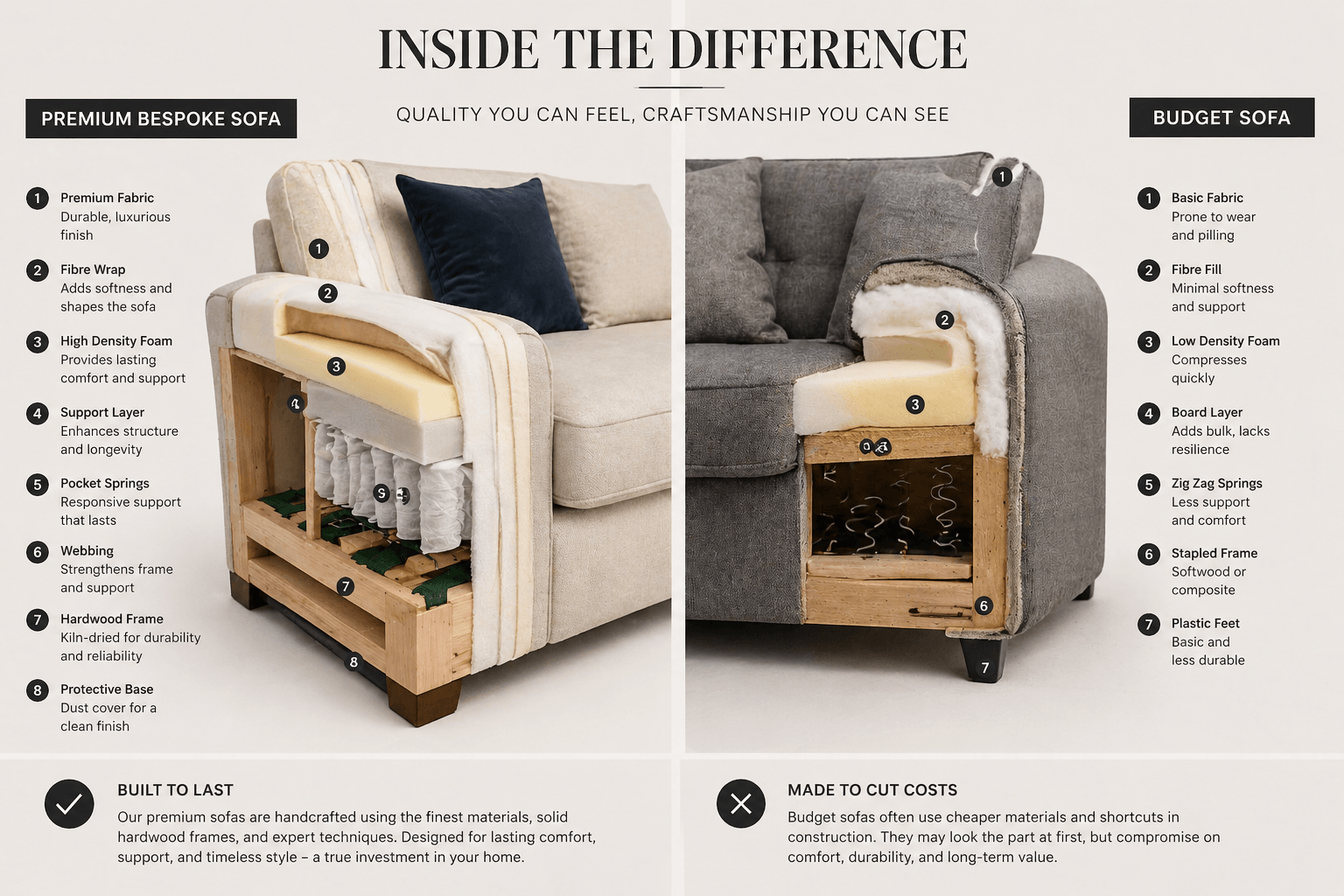
The hidden difference: materials underneath
This is where real value sits.
Two sofas can look identical but differ in:
-
-
- Foam density
- Frame structure
- Fabric performance
- Internal reinforcement
-
At a glance? Same product.
In reality? Completely different lifespan.
Why bespoke sofas behave differently
This is where things change for good.
A bespoke sofa is built around:
-
-
- how you sit
- how often you use it
- how long you use it daily
- your comfort preference
-
At M I Furniture (Bradford), customers can choose:
-
-
- Soft foam
- Medium foam
- Firm foam
-
That alone changes the entire experience over time.
Because comfort isn’t universal, it’s personal.
The same applies to bespoke beds
Beds are even more personal.
Two people can sleep on the same mattress and feel:
-
-
- completely different support levels
- different pressure relief
- different long-term comfort
-
That’s why made-to-measure bed builds are growing fast in the UK.
Because people are realising:
Sleep quality is not guesswork anymore.
The real reason cheap furniture feels “different later”
Let’s simplify it.
Cheap furniture is designed for:
-
-
- first impression comfort
- visual appeal
- showroom performance
-
Not:
-
-
- long-term daily life
- posture support
- durability under pressure
-
That gap is what people feel at home.
Why people keep repeating the same mistake
It’s not ignorance.
It’s psychology.
We trust what we can see and feel immediately.
But furniture doesn’t behave like that.
It’s a long-term product being judged in a short-term environment.
That mismatch is the real issue.
How to avoid disappointment when buying furniture
Before you decide, ask:
✅ What foam density is used?
✅ What frame supports it?
✅ How will it feel after months, not minutes?
✅ Can comfort be adjusted or customised?
✅ Is it built for daily use or display appeal?
If those answers are unclear, that tells you something.
Where bespoke furniture wins every time
This is the key difference.
Bespoke furniture is not about luxury.
It’s about alignment:
-
-
- with your body
- with your home
- with your lifestyle
-
That’s why it performs better long-term.
Because it’s not guessing what works.
It’s built for you specifically.

Final thought
Most people don’t buy the wrong sofa or bed.
They just buy it under the wrong conditions.
A showroom is designed to impress.
A home is designed to be lived in.
And those are not the same thing.
Once you understand that, furniture buying becomes much clearer.
You stop choosing based on how something feels in 2 minutes…
And start choosing based on how it performs for years.
That’s where real value starts.
Frequently Asked Questions
Why does my sofa feel different at home?
Because showroom conditions are controlled and short-term, while home use involves long-term pressure, lighting changes, and daily usage.
Do bespoke sofas feel better long-term?
Yes, because they are built around your comfort preferences and daily usage patterns rather than generic sizing.
Why do showroom sofas feel softer?
Because they are designed for quick comfort impressions under controlled conditions, not long-term support.
Is foam density important?
Very important, it directly affects comfort, durability, and how the sofa behaves over time.
Are bespoke beds worth it?
Yes, because sleep comfort is highly personal and bespoke builds allow firmness and support to be tailored.