

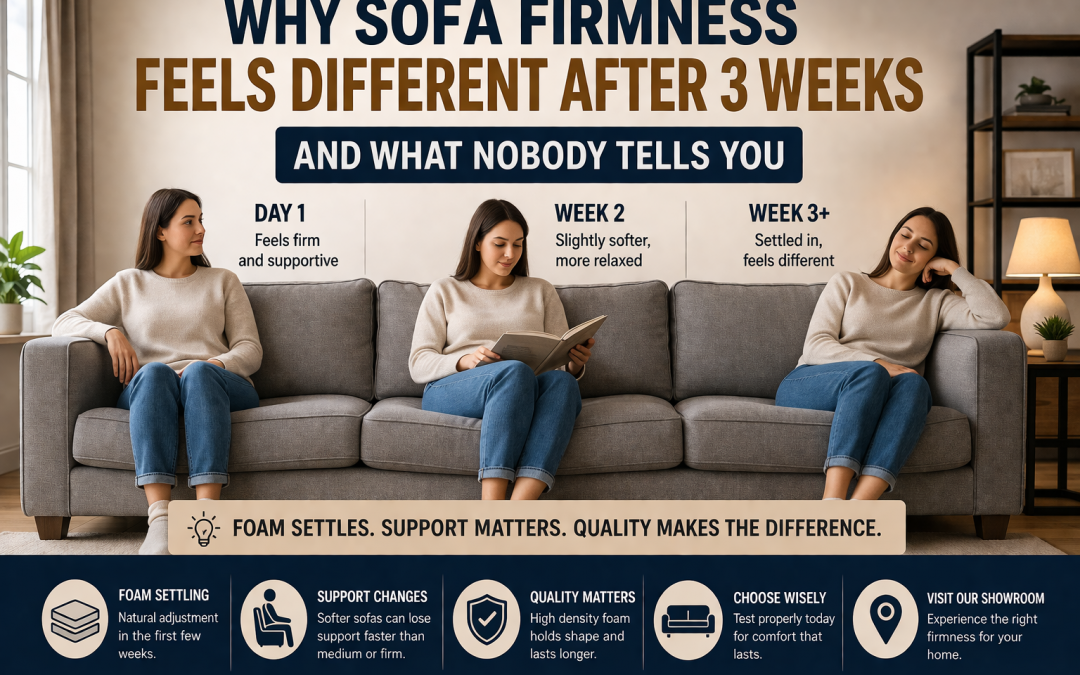
Why Sofa Firmness Feels Different After 3 Weeks And What Nobody Tells You
Most sofas feel different after a few weeks because foam naturally settles and adapts under regular use. What feels firm in a showroom can soften at home, while overly soft sofas may quickly lose support. The real issue is not that the sofa has “gone bad” but that most people are never told how firmness actually changes over time.
✅ TLDR
-
-
- Sofa firmness naturally changes during the first few weeks
- Foam settling is normal but poor-quality foam breaks down quickly
- Soft sofas often lose support faster than medium or firm options
- Body weight, usage, and foam density all affect feel over time
- Understanding foam behaviour helps avoid expensive mistakes
-
Here is the moment most people start worrying
You buy a new sofa.
At first, it feels perfect.
Supportive. Comfortable. Nicely balanced.
Then about two or three weeks later, you sit down and think:
“This feels softer than before.”
That single moment causes a surprising amount of anxiety.
People start wondering:
-
-
- Has the foam collapsed
- Is something wrong with the cushions
- Did I choose the wrong firmness
-
And honestly, across Bradford and nearby areas like Leeds, this happens constantly.
But here is the truth:
Most people are never properly told what happens to sofa firmness after delivery.
Why does sofa firmness change after a few weeks
Because foam is designed to settle.
This is one of the most misunderstood things in furniture.
When a sofa is brand new:
-
-
- The foam is fresh from manufacturing
- The fibres are tightly compressed
- The structure has not yet adapted to body weight
-
After regular use:
-
-
- Air pockets shift slightly
- Fibres loosen naturally
- The foam starts reaching its “true comfort level”
-
This process is completely normal.
The difference between settling and sagging
This distinction matters.
Settling is normal
A slight softening during the first few weeks is expected.
The sofa becomes:
-
-
- More natural feeling
- Less stiff
- More responsive
-
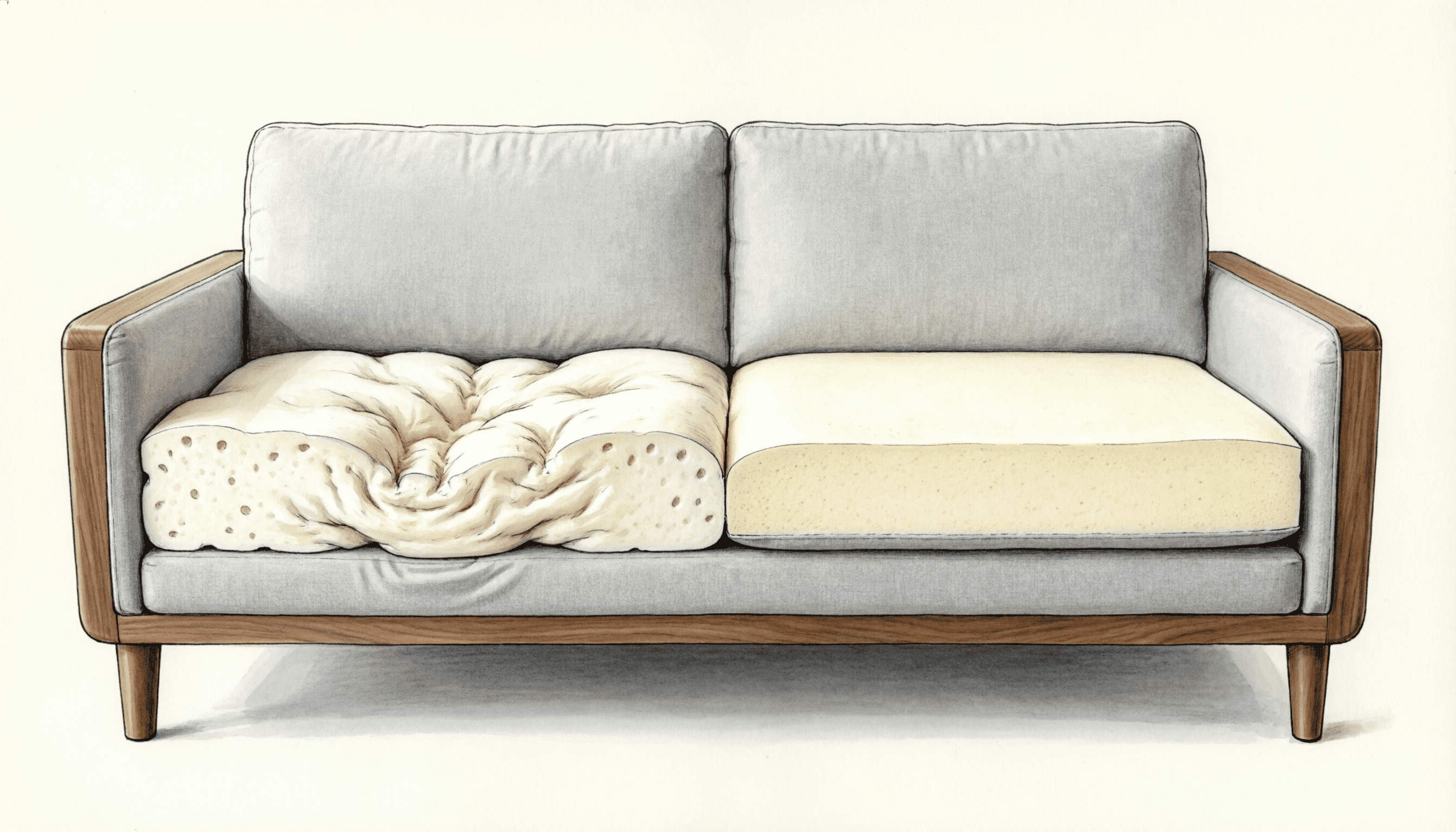
Sagging is different
Sagging happens when:
-
-
- The foam lacks density
- Support breaks down too quickly
- The structure no longer rebounds properly
-
That is not normal wear.
That is poor material performance.

Why softer sofas usually change faster
This is something most people do not realise before buying.
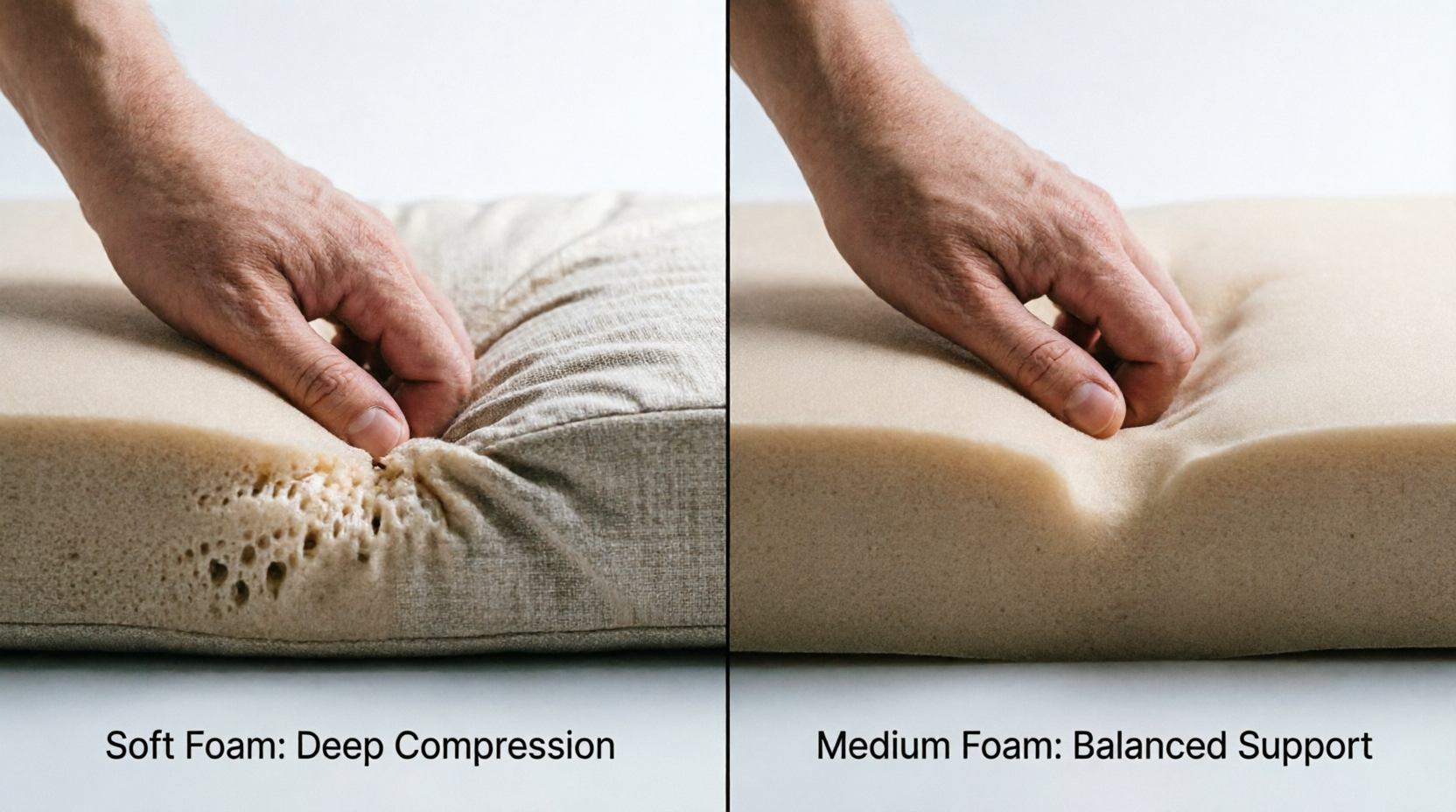
The softer the foam, the more movement it allows.
That creates:
-
-
- Immediate comfort
- A cosy feeling
- Less resistance
-
But it also means:
-
-
- Faster compression
- More visible changes
- Reduced long term support
-
This is why many people say:
“It felt amazing at first but now it feels too soft.”
The showroom effect nobody talks about
Furniture showrooms create a very specific experience.
You usually:
-
-
- Sit for five minutes
- Test posture briefly
- Compare multiple sofas quickly
-
But you are not experiencing:
-
-
- Long periods of use
- Daily body pressure
- Repeated sitting patterns
-
That is where reality changes.
Real scenario
A homeowner in Huddersfield chose a very soft sofa because it felt luxurious in store.
After a month:
-
-
- They sank lower into the cushions
- Support reduced noticeably
- Getting up became harder
-
The sofa had not “failed.”
It simply softened beyond their comfort preference.
Why medium firmness often performs best long term
There is a reason many experienced furniture makers recommend medium firmness.
It provides:
-
-
- Better posture support
- More structural balance
- Longer lasting comfort
-
At first, medium foam may feel:
-
-
- Slightly firmer
- Less “sink in” soft
-
But over time:
-
-
- It stabilises better
- Holds shape longer
- Feels more consistent daily
-
The role of body weight and usage
Here is another thing people are rarely told.
Different people experience firmness differently.
A sofa will feel softer:
-
-
- To heavier users
- In high use households
- In frequently used seating positions
-
That is why one seat often changes faster than another.
It does not necessarily mean the sofa is faulty.
It means the materials are adapting to repeated pressure.
Why cheaper sofas change more dramatically
This is where build quality becomes obvious.
Lower quality sofas often use:
-
-
- Low density foam
- Thin support layers
- Weaker internal structure
-
These materials soften much faster.
That creates:
-
-
- Uneven seating
- Loss of support
- Faster visible wear
-
Higher quality foam behaves differently.
It still settles naturally.
But it retains:
-
-
- Shape
- Support
- Comfort balance
-
for much longer.
The emotional frustration people feel
This issue affects people more than they expect.
Because comfort is personal.
When a sofa starts feeling different:
-
-
- You question your decision
- You become hyper aware of the cushions
- You stop relaxing naturally
-
That subtle frustration builds quietly over time.
Especially when the sofa looked perfect initially.
What people should actually test before buying
Instead of asking:
“Does this feel soft”
Ask:
“Will this support me properly every day”
That is a completely different question.
Things to test properly
✅ How easy is it to stand back up.
✅ Does the seat support your lower back.
✅ Do you sink too deeply.
✅ Can you sit comfortably for long periods.
✅ Does the firmness feel balanced rather than overly soft.
These details matter far more long term.
Why bespoke options make a difference
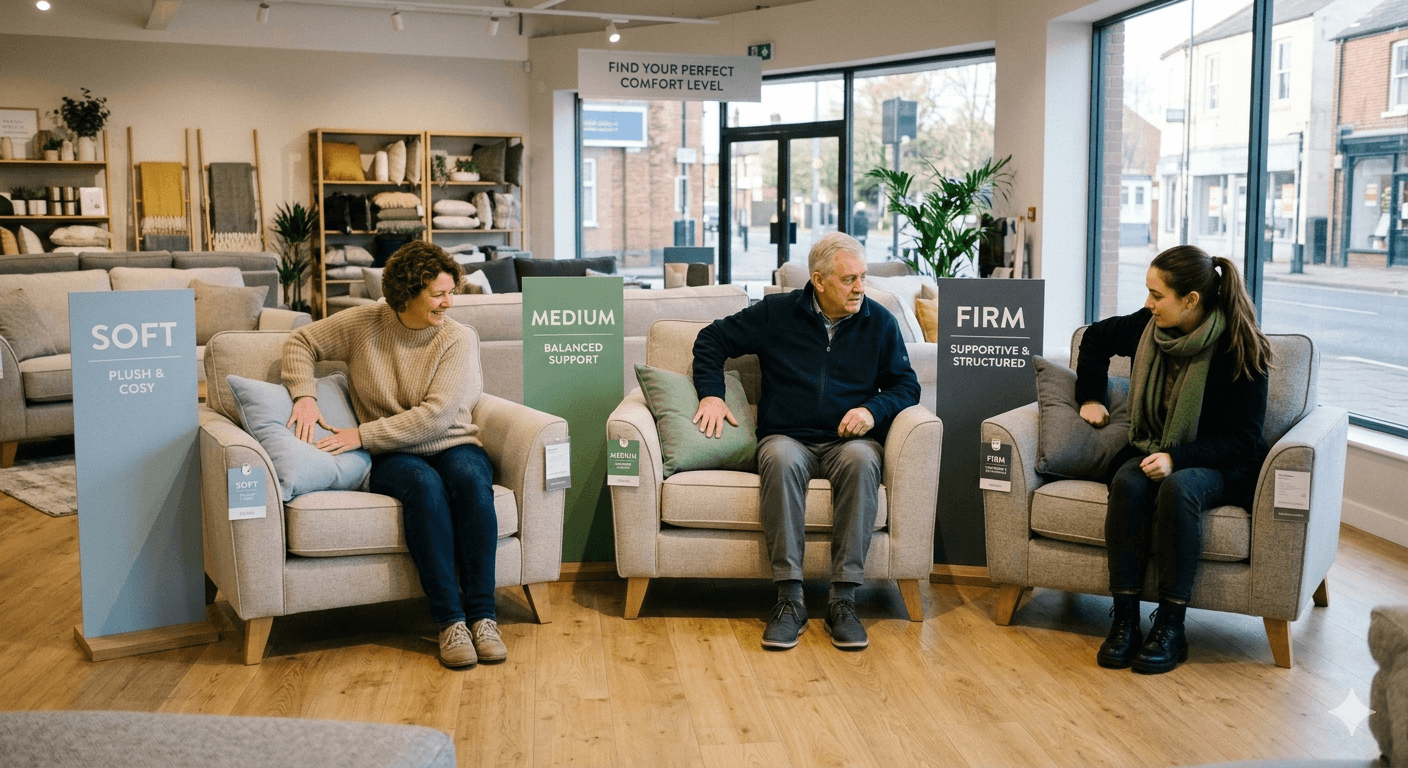
One of the biggest advantages of bespoke furniture is flexibility.
Instead of one generic comfort level, you can often choose:
-
-
- Soft
- Medium
- Firm
-
based on:
-
-
- Your posture
- Household usage
- Personal preference
-
That changes everything.
Because comfort is not universal.
The mistake most people make
They assume firmness is permanent.
But furniture is a material product.
Like shoes or mattresses:
-
-
- It adapts
- It settles
- It changes slightly with use
-
The goal is not finding something that never changes.
The goal is finding something that settles into lasting support rather than losing structure completely.
🧭 Final thought
A sofa feeling different after three weeks is not automatically a problem.
In many cases, it is simply the foam settling naturally.
The real question is:
-
-
- Does it still support you properly
- Does it still feel balanced
- Does it still work for how you live
-
Because good furniture is not about how it feels for five minutes in a showroom.
It is about how it feels after months of real life use.
Once people understand that, they stop chasing temporary softness and start looking for lasting comfort.
👉 If you are choosing a sofa in Bradford or nearby areas
Take time to understand firmness properly.
Ask about foam density.
Think long term rather than immediate softness.
Because the best sofa is not the one that feels impressive for five minutes.
It is the one that still feels right months later.
Frequently Asked Questions
Why does my new sofa feel softer after a few weeks
This is usually normal foam settling where the materials adjust naturally under regular use
Is it normal for sofa cushions to soften
Yes slight softening is expected especially during the first few weeks of use
What is the best sofa firmness for long term comfort
Medium firmness is often the best balance between support and comfort for long term daily use
How do I know if my sofa foam is poor quality
If the cushions lose shape quickly or stop supporting properly within a short time the foam may be low density
Why does one sofa cushion feel softer than another
This often happens because one seating position receives more regular pressure and use than the others