

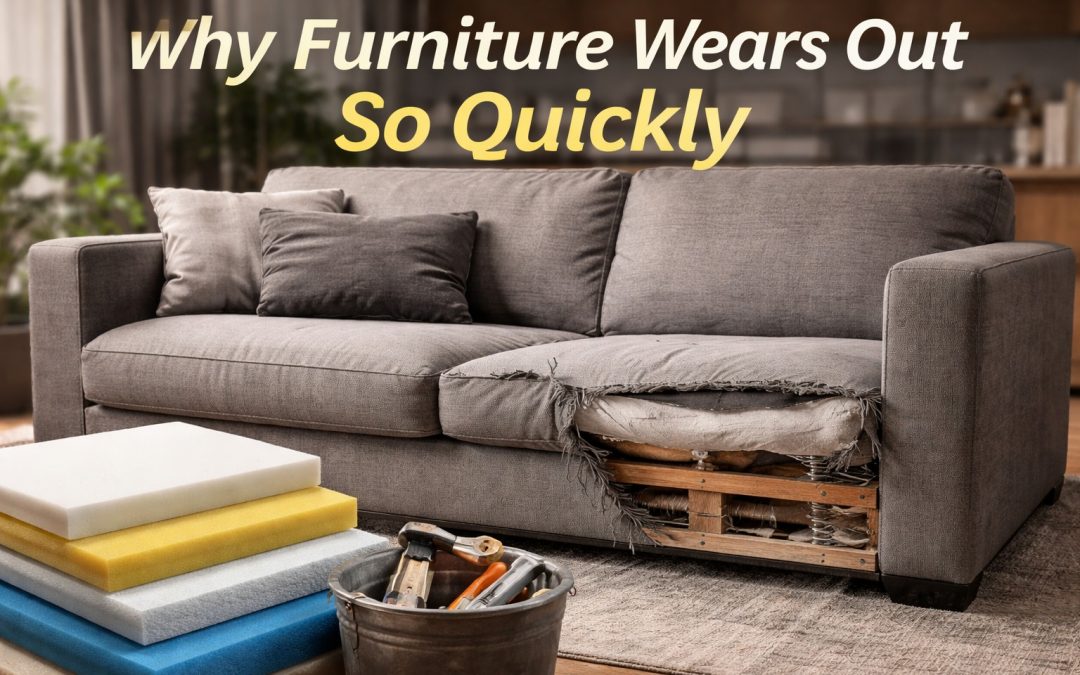
Why Furniture in Bradford Wears Out So Quickly (And What Most People Don’t Realise Until It’s Too Late)
✅ TL;DR
-
-
- Most furniture wears out quickly due to low-density foam and weak frames
- Big retailers often cut costs in hidden components
- Fabric quality directly impacts lifespan
- Hardwood frames and proper foam = long-term comfort
- Bespoke furniture is designed to last-not just look good initially
-
Let me be blunt - this catches people off guard every time
-
-
- The seat feels softer
- One side dips slightly
- The back support isn’t quite right
-
Then suddenly, you realise: “This doesn’t feel like the same sofa anymore.” We hear this all the time from customers across Leeds, Halifax, even quieter areas like Huddersfield. And here’s the truth…
Why does furniture lose comfort so quickly?
-
-
- Low-density foam compresses quickly
- Cheap frames flex under weight
- Fabric stretches and loses structure
-
Quick example: A customer from Bradford bought a budget sofa from a large retailer. Looked great. Felt decent. But within a year:
-
-
- The seat collapsed in high-use areas
- The fabric started to wrinkle and sag
- The frame developed a slight creak
-
That’s not “normal wear and tear.” That’s build quality catching up with reality. The biggest mistake people make (and it’s not your fault) You’re judging furniture based on what you can see. But durability comes from what you can’t see. Let’s break that down.
What actually controls how long your furniture lasts?
-
-
- Softwood or engineered wood = cheaper, less durable
- Hardwood = stronger, longer-lasting
-
👉 This is why some sofas last 2 years… and others last 10+ 2. Foam density (the hidden culprit) This is where most people get burned.
-
-
- Low-density foam = soft at first, collapses quickly
- High-quality foam = holds shape, supports properly
-
And here’s the tricky part: Two sofas can feel identical on day one—but perform completely differently over time. 3. Fabric quality (more important than you think) Fabric isn’t just about looks. It affects:
-
-
- Wear resistance
- Shape retention
- Safety (especially with FR fabrics in the UK)
-
Cheaper fabrics:
-
-
- Stretch
- Fade
- Lose structure
-
Better fabrics:
-
-
- Hold their shape
- Resist wear
- Last years longer
-
Why this problem is so common in Yorkshire homes
-
-
- Bradford
- Leeds
- Halifax
-
…aren’t just “display spaces.” They’re lived in. That means:
-
-
- Daily use
- Family wear and tear
- Real-life pressure on furniture
-
Mass-produced furniture struggles under that.
Here’s where things get interesting…
-
-
- It held its shape
- It supported properly
- It actually became more comfortable
-
That’s the difference between: 👉 “Soft now, worse later” 👉 “Supportive now, better later”
The cost trap nobody warns you about
-
-
- A £500 sofa that lasts 2 years
- Then replace it
- Then replace it again
-
You’ve spent £1,500+ over time. Versus:
-
-
- A properly built sofa that lasts 8–10 years
-
Here’s the truth: Cheap furniture isn’t cheaper – it’s just paid for in instalments.
Checklist: How to spot furniture that won’t wear out quickly
✅ What type of wood is used in the frame? ✅ What foam density or firmness options are available? ✅ Is the fabric durable and compliant (FR-rated)? ✅ Does the supplier offer a real warranty? ✅ Can the build be customised for your usage?
If these questions aren’t answered clearly… That’s a red flag.
Where local expertise makes a real difference
-
-
- Understand real usage needs
- Offer guidance on firmness and materials
- Build furniture around the customer—not the warehouse
-
That’s a completely different experience from: “Pick it, pay, deliver, next customer.”
Final thought (this is the honest truth)
If you’re replacing furniture sooner than expected…
-
-
- Ask deeper questions
- Look beyond appearance
- Focus on what’s inside the build
-
It’s the difference between replacing furniture every few years… …and finally getting something that lasts.