

Why Furniture Prices in Bradford Vary So Much and What You Are Actually Paying For
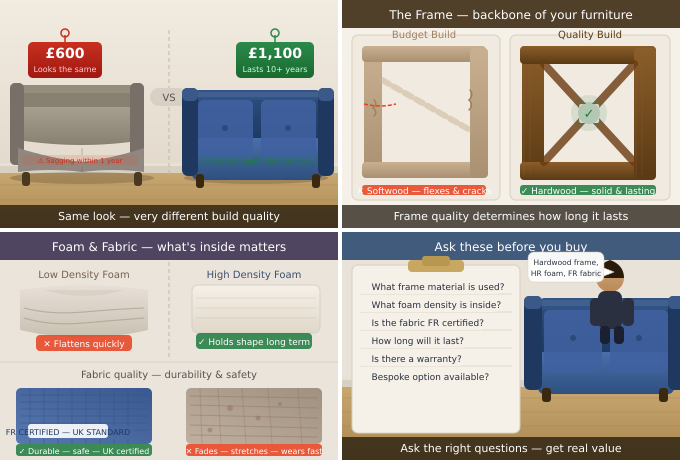
Furniture price Bradford varies widely because what looks similar on the surface can be built very differently underneath. Two sofas may appear identical, yet one lasts two years while another lasts ten. The real difference comes down to materials, construction, and how the furniture is made.
✅ TL;DR
-
-
- Price differences come from hidden build quality, not just design.
- Cheaper furniture often cuts corners in foam, frame, and fabric.
- Higher priced furniture reflects durability and long-term comfort.
- Bespoke options give better value when built properly.
- Understanding pricing helps avoid costly mistakes.
-
Let me tell you where people get caught out
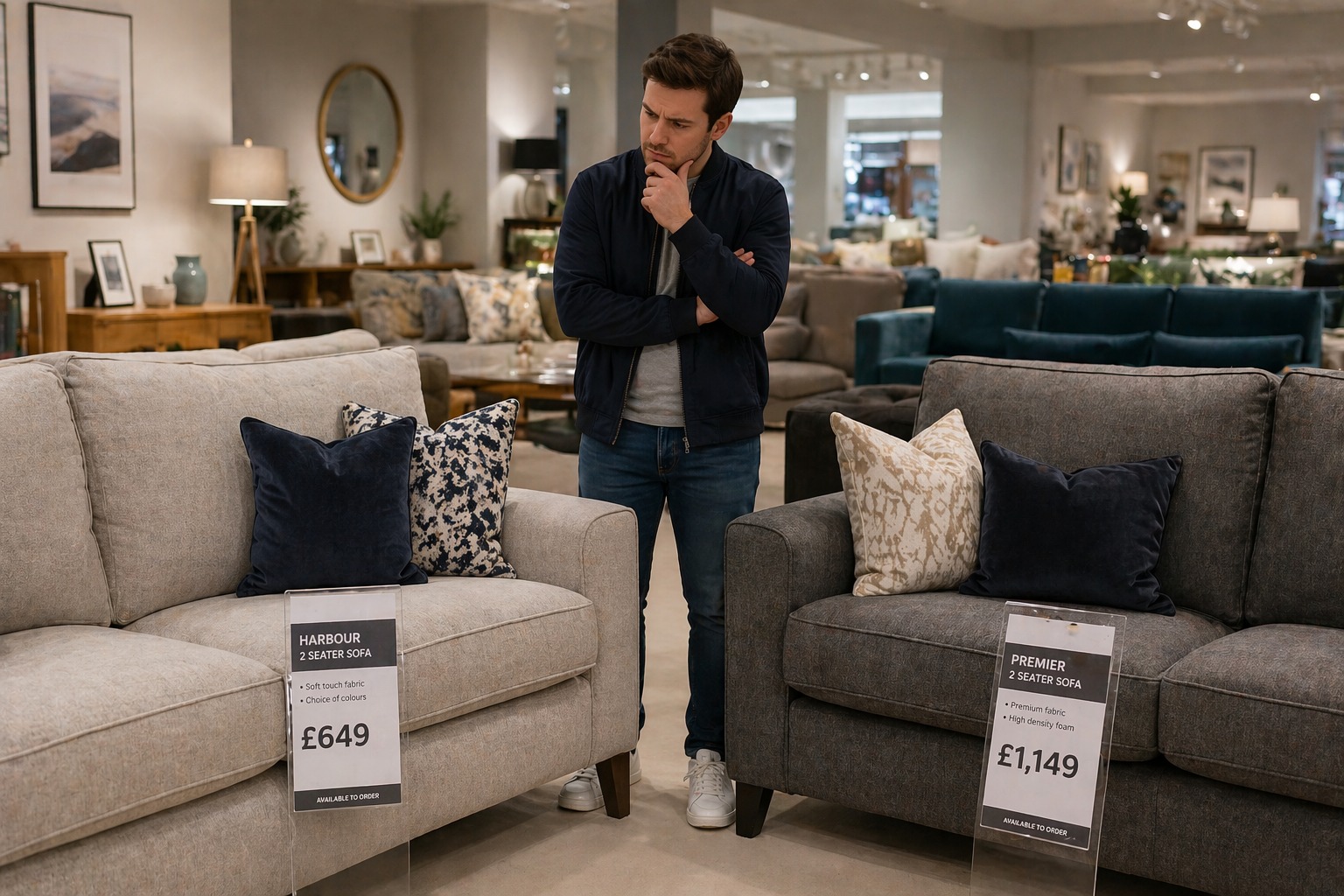
A customer walks into a showroom.
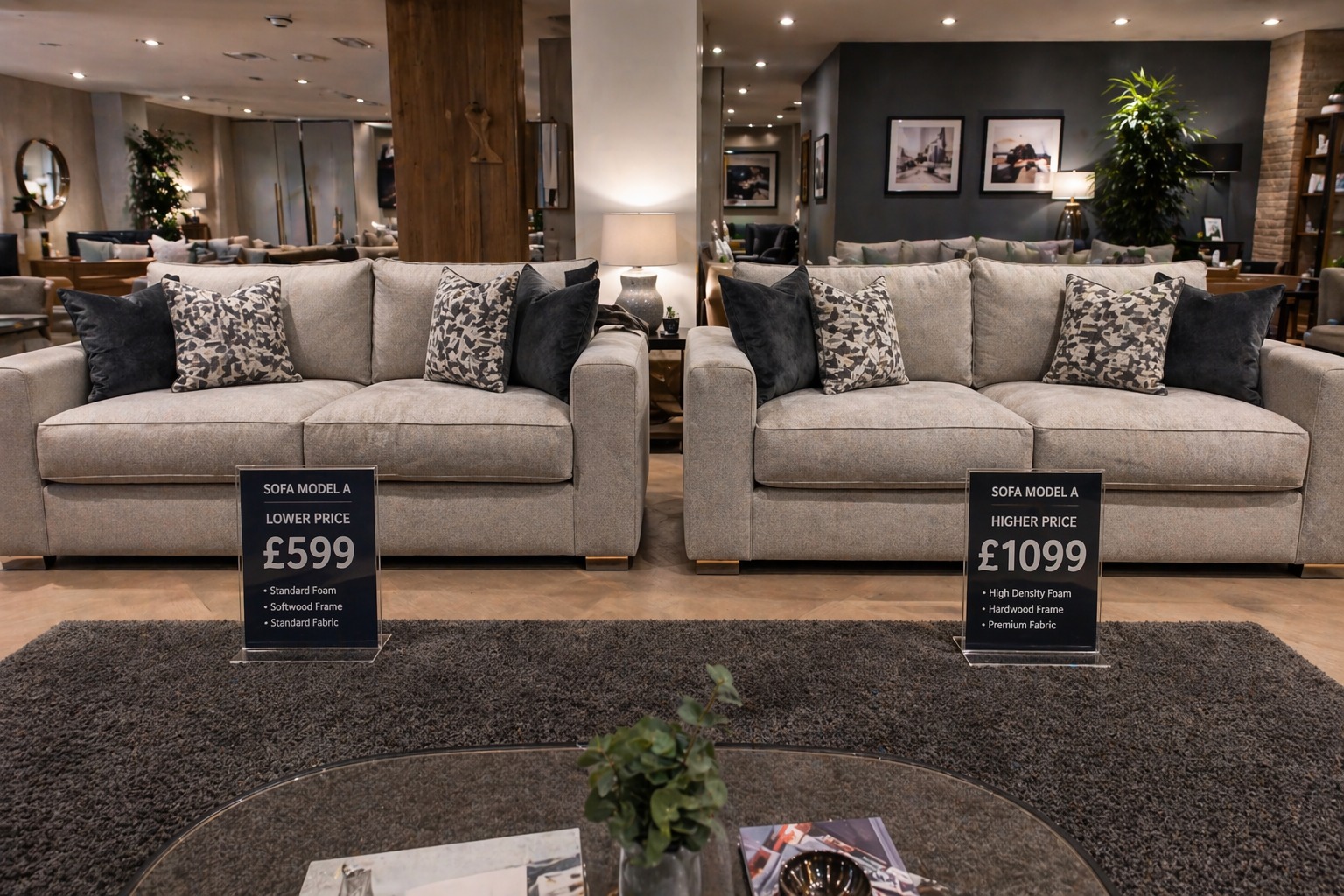
They see two sofas.
They look almost identical.
One is £600. The other is £1,100.
Naturally, the question comes up:
“Why would I pay nearly double for
something that looks the same?”
Fair question.
But here is the truth most people only
realise later:
They are not the same.
Not even close.
Why furniture pricing feels confusing
Because the differences are hidden.
You are not buying something where:
-
-
- You can easily compare specs
- You can see internal materials
- You can test long term durability
-
Instead, you are relying on:
-
-
- First impressions
- Short sitting tests
- Surface appearance
-
And that is exactly where confusion begins.
The illusion of “same product different price”
Here is what happens across places like Leeds and Halifax.
Retailers design furniture to look similar because:
-
-
- Trends sell
- Familiar designs feel safe
- Customers compare visually
-
But underneath:
-
-
- Materials vary
- Build methods vary
- Longevity varies
-
Real scenario
A homeowner in Bradford bought a lower priced sofa because it “looked the same.”
Within a year:
-
-
- It lost shape
- The seating dipped
- The comfort disappeared
-
They ended up replacing it sooner than expected.
What you are really paying for
Now let’s break this down properly.
Because this is where clarity comes in.
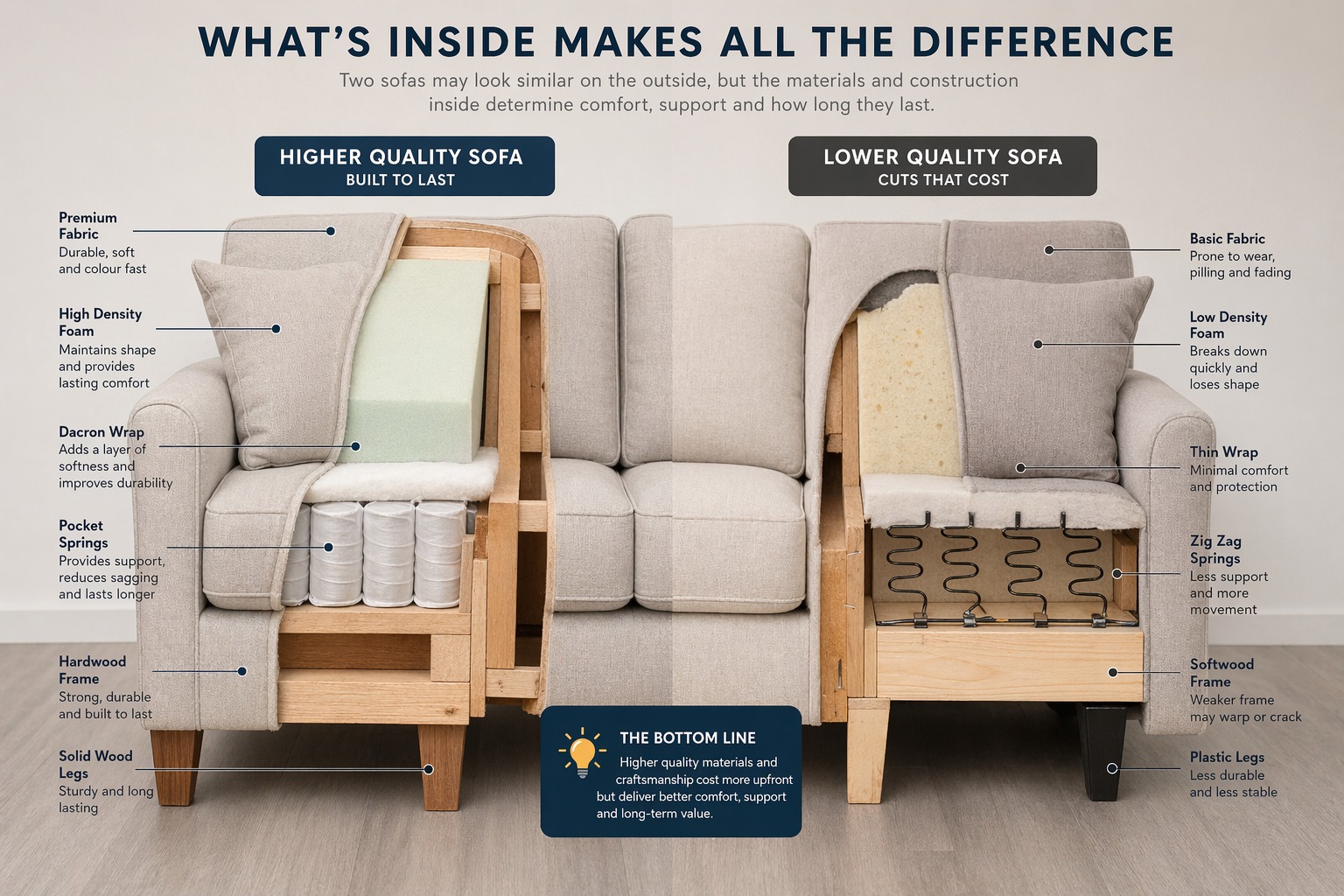
1. The frame
This is the backbone of the furniture.
Cheaper options often use:
-
-
- Softwood
- Engineered materials
-
Higher quality builds use:
-
-
- Hardwood
-
And here is the difference:
A weak frame:
-
-
- Flexes over time
- Causes sagging
- Shortens lifespan
-
A solid hardwood frame:
-
-
- Holds structure
- Supports weight properly
- Lasts significantly longer
-
2. Foam and cushioning
This is one of the biggest cost differences.
Lower priced furniture:
-
-
- Uses low density foam
- Feels soft initially
- Wears out quickly
-
Higher quality furniture:
-
-
- Uses better density foam
- Maintains support
- Improves comfort over time
-
This is where people often say:
“It felt great in the shop but not at home.”
3. Fabric quality
Fabric is not just about colour.
It affects:
-
-
- Durability
- Feel
- Safety
-
In the UK, quality furniture often uses FR fabrics.
These:
-
-
- Meet safety standards
- Last longer
- Hold their structure
-
Cheaper fabrics:
-
-
- Stretch
- Fade
- Wear out faster
-
4. Construction and build process
Here is something most people never think about.
How furniture is built matters.
Mass produced furniture:
-
-
- Focuses on speed
- Uses shortcuts
- Prioritises volume
-
More carefully built furniture:
-
-
- Takes longer
- Focuses on detail
- Is assembled properly
-
That difference shows up over time.
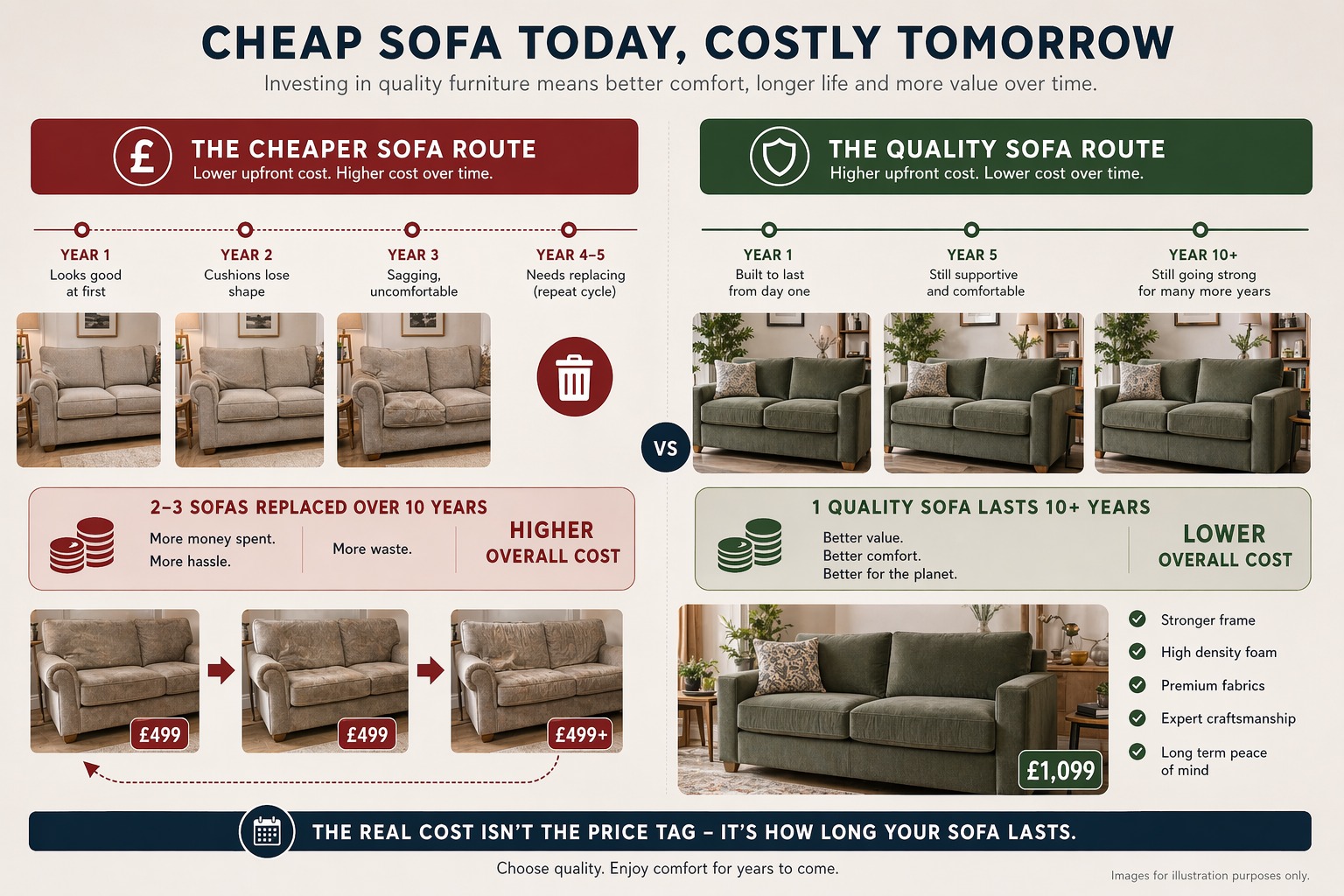
Why cheaper furniture often costs more in the long run.
Let me be blunt here.
This is where people get burned.
You buy a cheaper sofa thinking you are saving money.
But then:
-
-
- It wears out
- You replace it
- You repeat the process
-
Real example
A customer from Huddersfield went through two sofas in five years.
Both were budget options.
When they finally switched to a higher quality build, it lasted far longer.
The cost over time?
Higher with the cheaper route.
The role of bespoke furniture in pricing
This is where things shift.
Bespoke furniture is not about being expensive. It is about being precise.
You are paying for:
-
-
- Exact sizing
- Material choice
- Comfort preference
- Proper build quality
-
Instead of:
-
-
- Compromising on fit
- Accepting standard options
-
Why pricing varies so much in Bradford
In areas like Bradford and Leeds, you will find:
-
-
- Budget retailers
- Mid-range suppliers
- Bespoke specialists
-
Each operates differently.
That is why pricing can feel inconsistent.
But once you understand what goes into the product, it starts to make sense.
The mistake most people make when comparing prices
They compare:
-
-
- Appearance
- Size
- Price
-
But they do not compare:
-
-
- Internal build
- Materials
- Longevity
-
That is like comparing two cars based only on colour and shape.
It misses the point entirely
How to make a smarter decision
Before buying, ask:
✅ What materials are used inside
✅ What type of frame supports this
✅ What foam quality is included
✅ How long is this expected to last
✅ Is there a warranty
If those answers are unclear, that tells you something.
Where trust comes into play
Here is something that matters more than people realise.
Who you buy from is just as important as what you buy.
Because a good supplier will:
-
-
- Explain materials properly
- Guide you based on usage
- Help you choose the right comfort
-
Not just sell what looks good.
Final thought
Furniture pricing is not random.
It reflects what is inside the product.
The problem is, most of those details are hidden.
So people end up making decisions based on what they can see.
Once you understand what actually drives cost, everything changes.
You stop asking:
“Why is this more expensive”
And start asking:
“Why is that one cheaper”
That is where better decisions begin.
👉 If you are choosing furniture in Bradford or nearby areas
Take your time.
Ask questions.
Look beyond the surface.
Because the real value of furniture is not
how it looks on day one.
It is how it performs over time.
Frequently Asked Questions
Why are some sofas much cheaper than others
Cheaper sofas often use lower quality materials such as softwood frames and low density foam which reduces cost but also lifespan
Is expensive furniture always better
Not always but higher prices often reflect better materials and construction which improve durability and comfort
What affects the cost of furniture the most
Frame quality foam density fabric type and construction process are the main factors
Is bespoke furniture worth the price
Yes because it is tailored to your needs and often built with higher quality materials leading to better long term value
How do I know if furniture is overpriced
Compare materials build quality and warranty rather than just appearance and size