

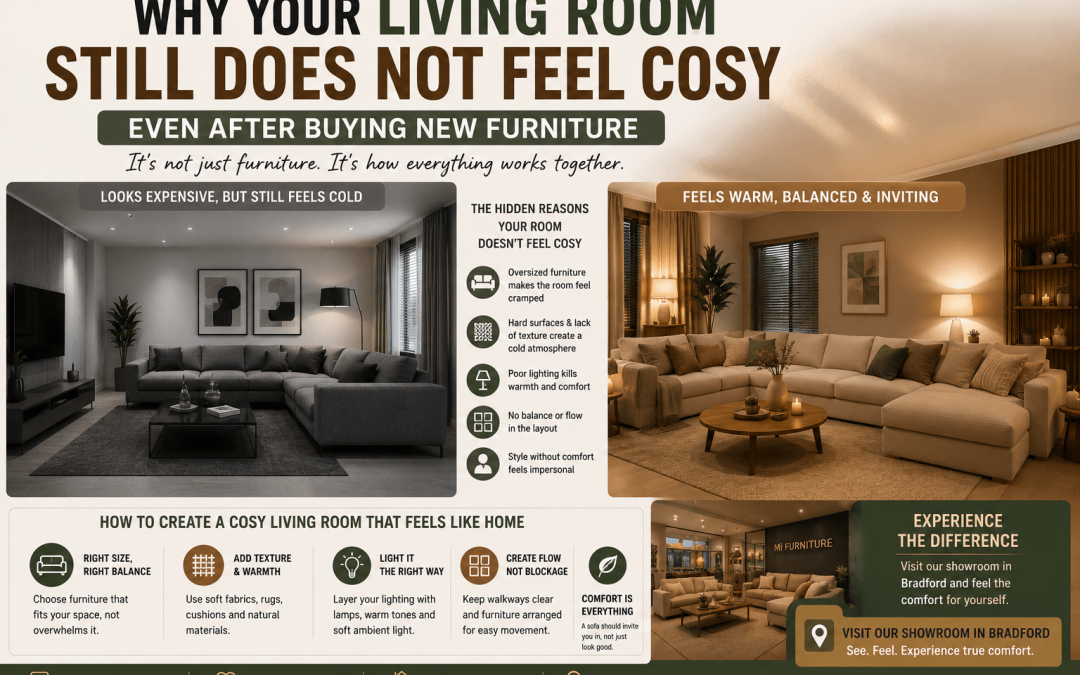
Why Your Living Room Still Does Not Feel Cosy Even After Buying New Furniture
Many homeowners spend thousands updating their living room furniture Bradford homes rely on but still feel like something is missing afterwards. Across Bradford and the wider Yorkshire area, people are realising that a cosy living room is not created by expensive furniture alone. It comes from balance, comfort, layout, texture, lighting, and choosing furniture that genuinely fits the way people live every day.
✅ TLDR
-
-
- Expensive furniture does not automatically create a cosy room
- Oversized sofas and poor layouts often make rooms feel colder
- Texture and warmth matter more in 2026 interior trends
- Lighting dramatically changes how furniture feels emotionally
- Comfort and atmosphere matter more than simply matching styles
-
This is becoming surprisingly common in modern homes
Someone redecorates their entire living room.
They buy:
-
-
- A new sofa
- Matching furniture
- Decorative accessories
- New flooring
- Modern lighting
-
Everything technically looks “better.”
Cleaner.
More expensive.
More modern.
But emotionally, the room still feels:
-
-
- Cold
- Uncomfortable
- Unfinished
- Difficult to relax in
-
And honestly, this happens constantly across homes in Bradford, Leeds, and Huddersfield.
People improve the appearance of their living room without improving how it actually feels to live in.
That difference matters more than most people realise.
Why cosy living rooms are becoming more important in 2026
A few years ago, many interior trends focused heavily on:
-
-
- Minimalism
- Sharp lines
- Grey colour palettes
- Ultra-modern styling
-
But something has changed.
People now want homes that feel:
-
-
- Warmer
- Softer
- More personal
- More emotionally relaxing
-
Especially after years of spending more time at home, homeowners increasingly want comfort rather than simply visual perfection.
This is one of the biggest furniture and interior shifts happening in 2026.
The biggest misconception people have about cosy interiors
People think cosiness comes from buying more furniture.
But actually:
cosiness comes from emotional comfort.
That means:
-
-
- Room balance
- Texture
- Warmth
- Lighting
- Flow
- Softness
- Practical comfort
-
A living room can be expensive and still feel emotionally cold.
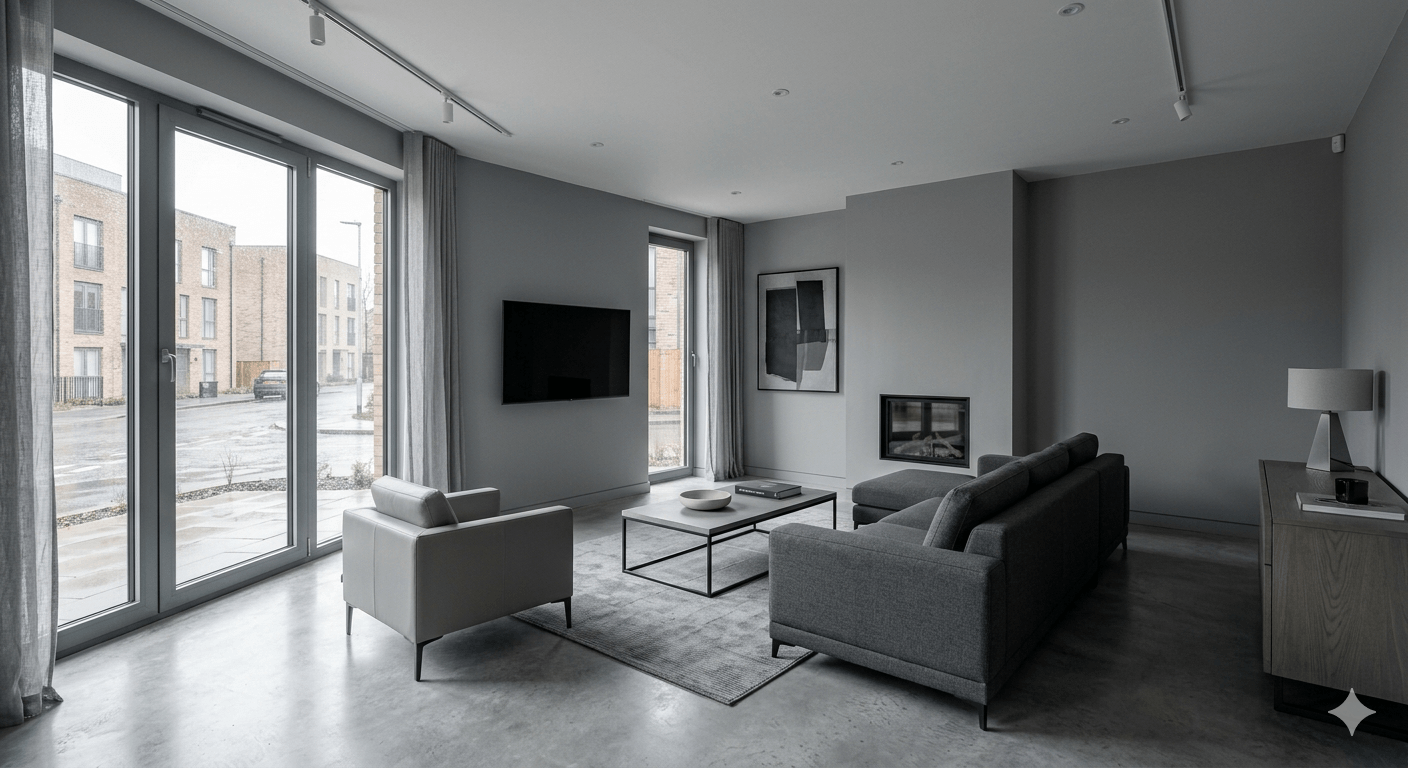
Why oversized sofas often ruin room atmosphere
This is one of the most common mistakes happening right now.
People see large luxurious sofas online and assume:
bigger equals better
But oversized sofas often:
-
-
- Block natural flow
- Reduce open space
- Make rooms feel visually heavy
- Create awkward layouts
-
Especially in traditional Yorkshire homes where room proportions differ from large showroom interiors.
This issue is incredibly common in homes around:
-
-
- Halifax
- Bradford
- Huddersfield
-
where many living rooms were never designed for oversized modern furniture.
Why texture matters more than colour in 2026
This is something many homeowners overlook completely.
Texture creates emotional warmth.
Not just colour.
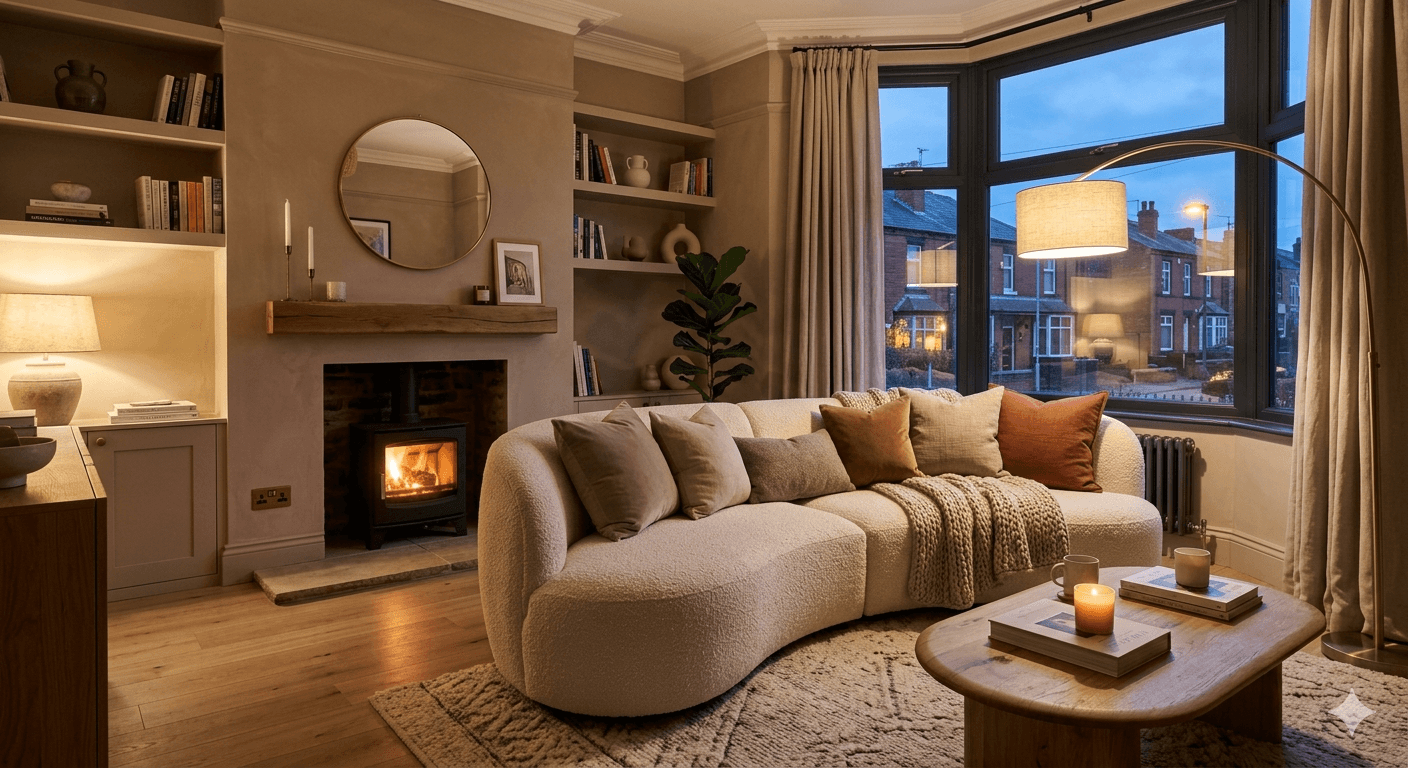
That is why interiors now increasingly feature:
-
-
- Boucle fabrics
- Soft woven materials
- Warmer upholstery
- Layered cushions
- Natural textures
-
because they create:
-
-
- softness visually
- comfort psychologically
- warmth emotionally
-
Minimal glossy interiors may look impressive online.
But they often feel colder in real life.
Real example
A homeowner from Leeds redesigned their living room with:
-
-
- grey furniture
- polished surfaces
- monochrome accessories
-
The room looked modern initially.
But after a few months, they described it as:
“Feeling more like a showroom than a home.”
After introducing:
-
-
- warmer fabrics
- softer textures
- earthy tones
-
the room immediately felt more comfortable emotionally despite minimal furniture changes.
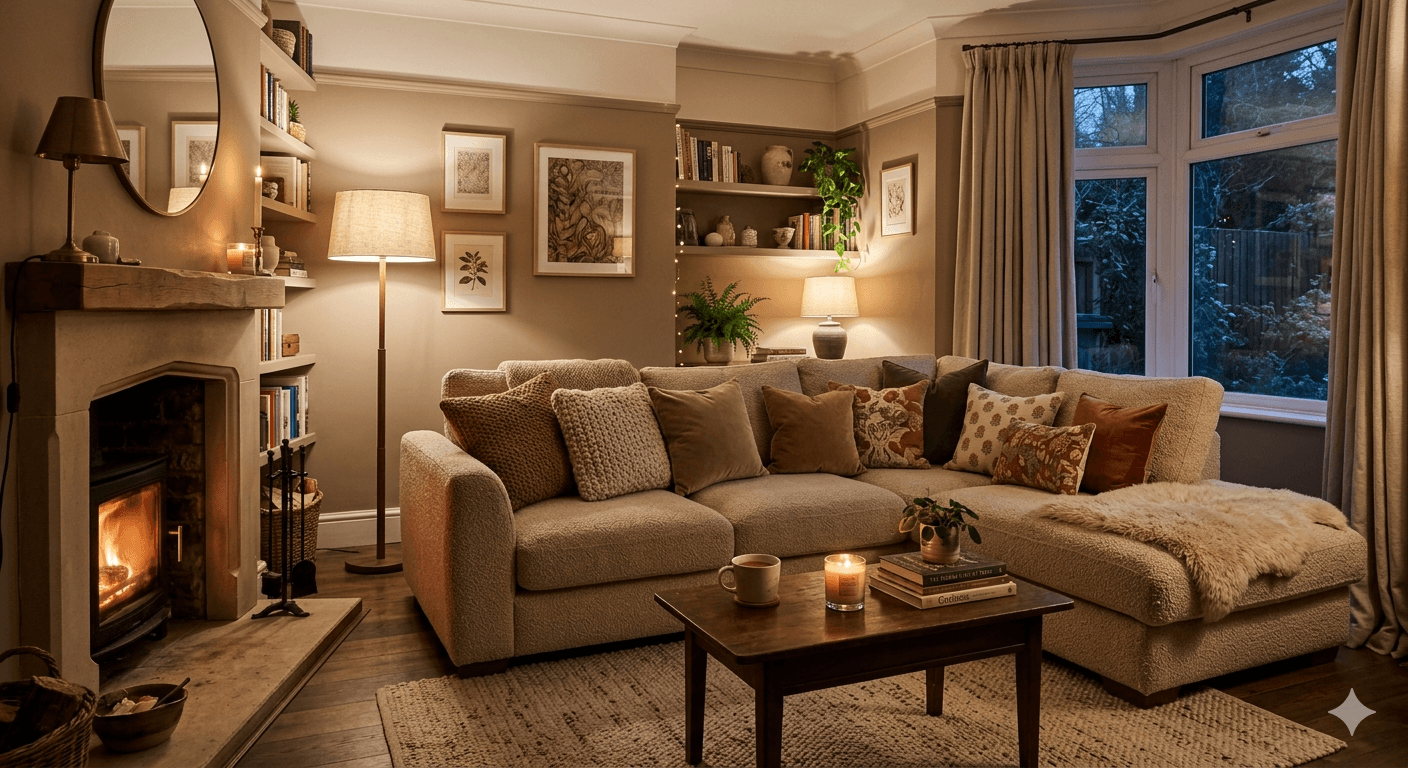
The lighting mistake most people make
Lighting changes everything.
And honestly, it is one of the biggest reasons living rooms fail to feel cosy.
Many modern interiors rely too heavily on:
-
-
- bright white lighting
- ceiling spotlights
- harsh LED tones
-
This creates:
-
-
- visual sharpness
- colder atmosphere
- reduced emotional warmth
-
Warm living rooms usually combine:
-
-
- softer lighting
- layered lamps
- natural shadows
- warmer colour temperatures
-
because emotional comfort is heavily connected to lighting psychology.
Why matching furniture sets can make rooms feel lifeless
This is a huge modern interior design conversation right now.
Perfectly matching furniture often removes personality from a room.
Everything becomes:
-
-
- visually predictable
- overly coordinated
- emotionally flat
-
Modern interiors feel warmer when they include:
-
-
- variation
- layering
- mixed textures
- softer contrast
-
That is why many modern designers are moving away from “showroom perfect” layouts.
The hidden importance of furniture proportions
This is something people rarely think about properly.
Furniture should feel balanced relative to the room.
For example:
-
-
- low sofas make ceilings feel taller
- bulky furniture makes rooms feel compressed
- oversized armrests visually reduce space
-
Even small proportion changes dramatically affect how a room feels emotionally
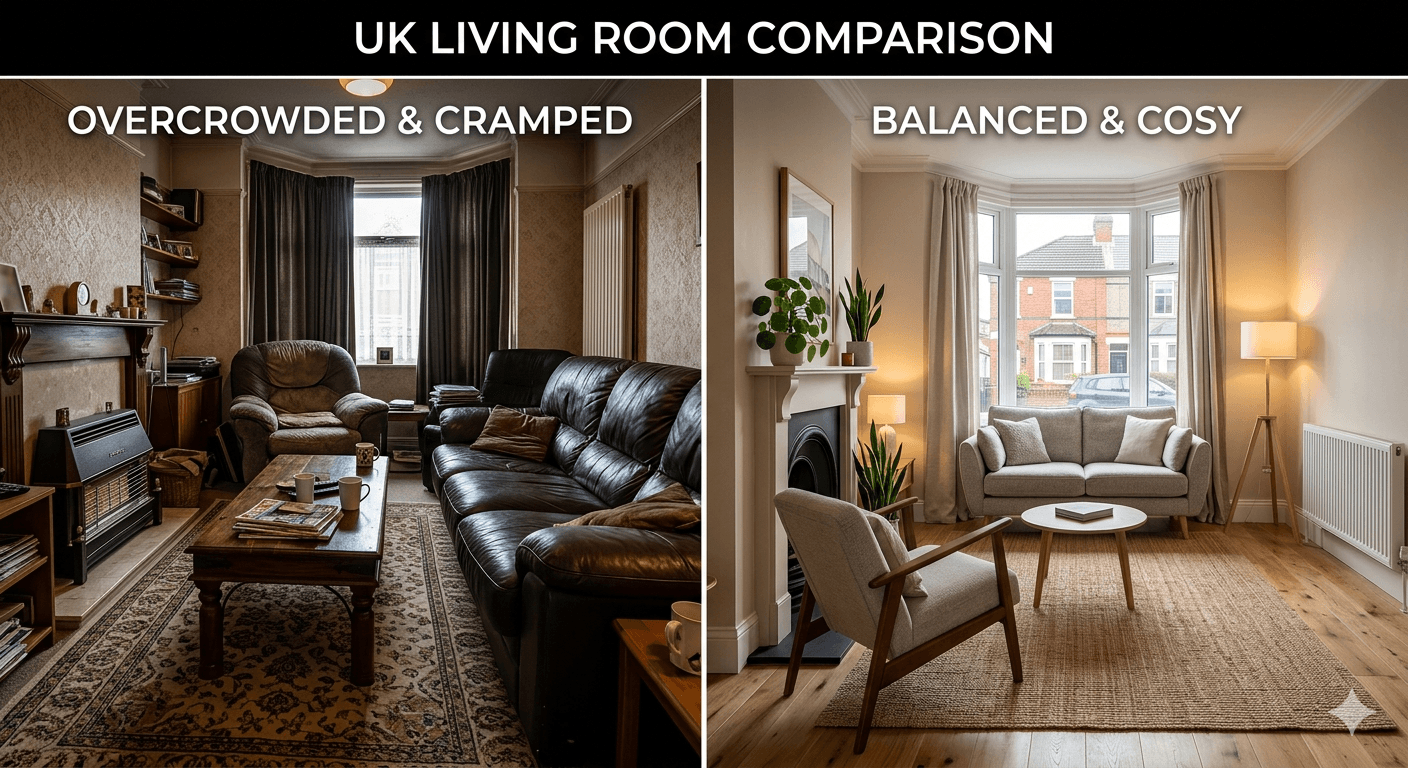
Why modern living rooms are becoming softer again
Interior trends are moving away from:
-
-
- ultra minimalism
- hard edges
- cold colour palettes
-
and toward:
-
-
- curved furniture
- softer fabrics
- warmer tones
- natural textures
-
because people are craving emotional comfort again.
Especially in busy modern lifestyles, homeowners increasingly want rooms that feel:
-
-
- peaceful
- calming
- restorative
-
rather than simply visually impressive.
Why comfort psychology matters more than people realise
This goes deeper than design trends.
A cosy room affects:
-
-
- stress levels
- relaxation
- social comfort
- emotional wellbeing
-
When furniture feels uncomfortable or visually cold:
-
-
- people relax less naturally
- rooms feel less inviting
- the atmosphere changes subtly
-
That emotional layer is what many people struggle to identify after redecorating.
They improve the appearance but forget the feeling.
Why modular furniture is quietly helping modern interiors
This is becoming increasingly popular across Harrogate and nearby areas.
Modular furniture creates:
-
-
- flexibility
- lighter room flow
- adaptable layouts
-
which helps rooms feel:
-
-
- more open
- less rigid
- more naturally lived in
-
This is one reason modular sofas continue growing in popularity throughout 2026.
The role of softness in emotional interiors
Softness is no longer viewed as weakness in design.
It is becoming one of the most important parts of modern interiors.
This includes:
-
-
- softer fabrics
- rounded furniture
- warmer tones
- layered textures
-
because homes are increasingly expected to feel emotionally restorative not just visually modern.
What smart homeowners are doing differently now
Instead of asking:
“Does this look modern”
they ask:
-
-
- Will this room feel comfortable daily
- Does the furniture fit the space emotionally
- Is the lighting too cold
- Does the room feel relaxing naturally
- Will this still feel welcoming long term
-
That shift completely changes interior decisions.
The mistake most people only realise later
They decorate for appearance first.
And emotional comfort second.
But the rooms people love most long term are usually not:
-
-
- the trendiest
- the most expensive
- the most minimal
-
They are the rooms that feel:
-
-
- warm
- balanced
- comfortable
- calming to spend time in
-
That emotional reaction matters far more than people initially expect.
Final thought
A cosy living room is not created by buying expensive furniture alone.
It is created by balance.
The right:
-
-
- textures
- proportions
- lighting
- layout
- comfort
-
all work together emotionally.
That is why some rooms instantly feel relaxing while others still feel cold even after major redesigns.
In 2026, the best interiors are no longer the ones that simply look impressive online.
They are the ones that genuinely improve how people feel inside their home every day.
👉 If you are updating your living room in Bradford or nearby areas
Think beyond appearance alone.
Focus on:
-
-
- comfort
- warmth
- layout
- texture
- emotional atmosphere
-
Because the best living rooms are not just stylish.
They are the ones people genuinely want to spend time in.
Frequently Asked Questions
Why does my living room still feel cold after redecorating
Cold lighting oversized furniture and lack of texture often make rooms feel emotionally uninviting
What makes a living room feel cosy
Warm lighting softer textures balanced furniture proportions and comfortable layouts all contribute to a cosy atmosphere
Are grey interiors going out of style in 2026
Many homeowners are moving toward warmer earthy interiors and softer textures rather than colder monochrome spaces
Can oversized sofas make rooms feel smaller
Yes bulky furniture can visually and physically reduce room openness significantly
Why do showroom living rooms feel different from real homes
Showrooms use larger spaces professional styling and controlled lighting which changes how furniture feels emotionally